


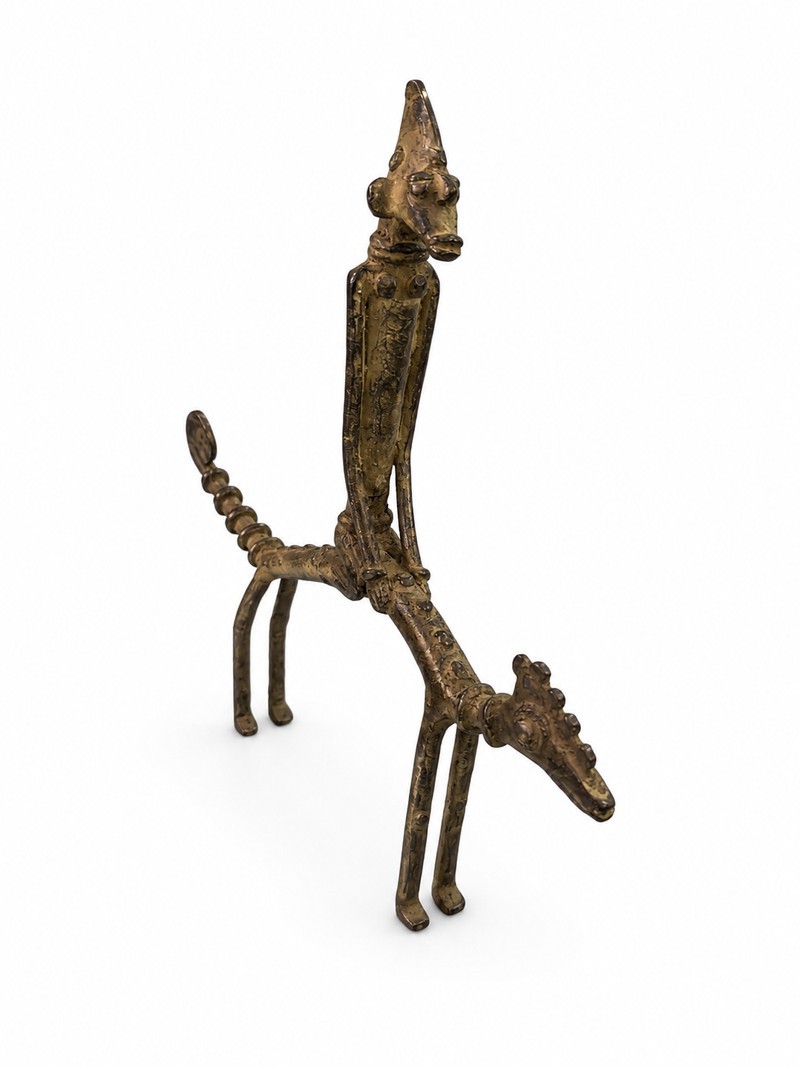
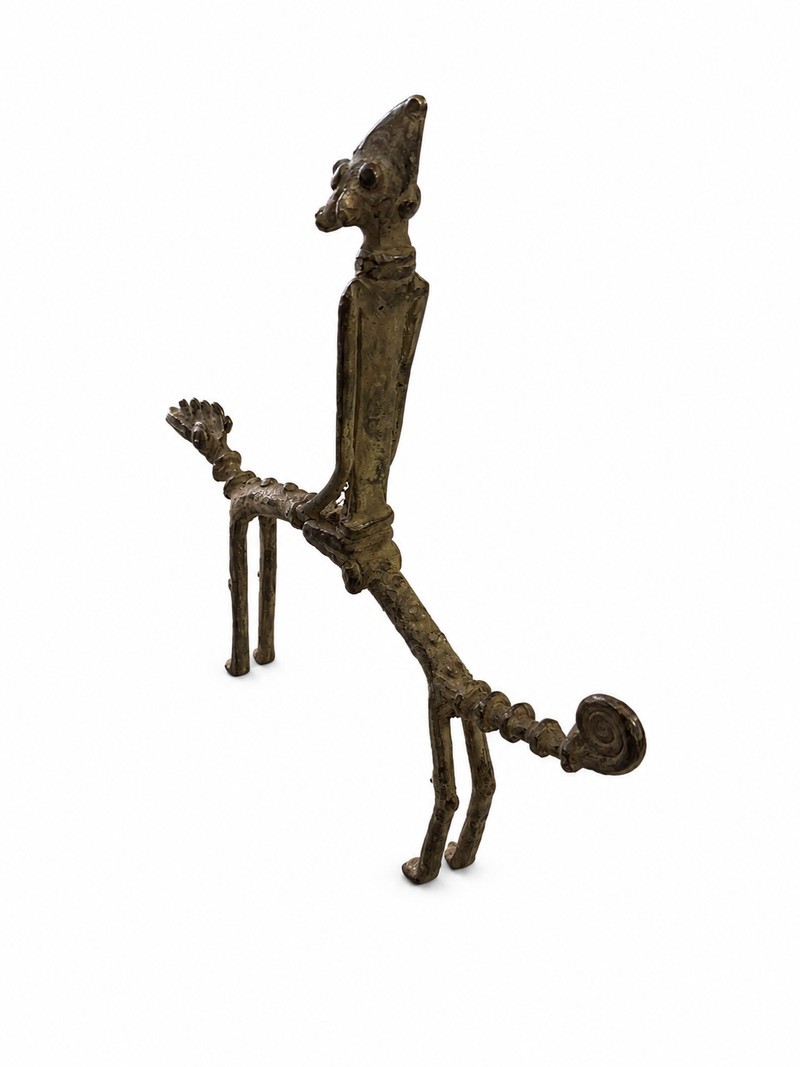
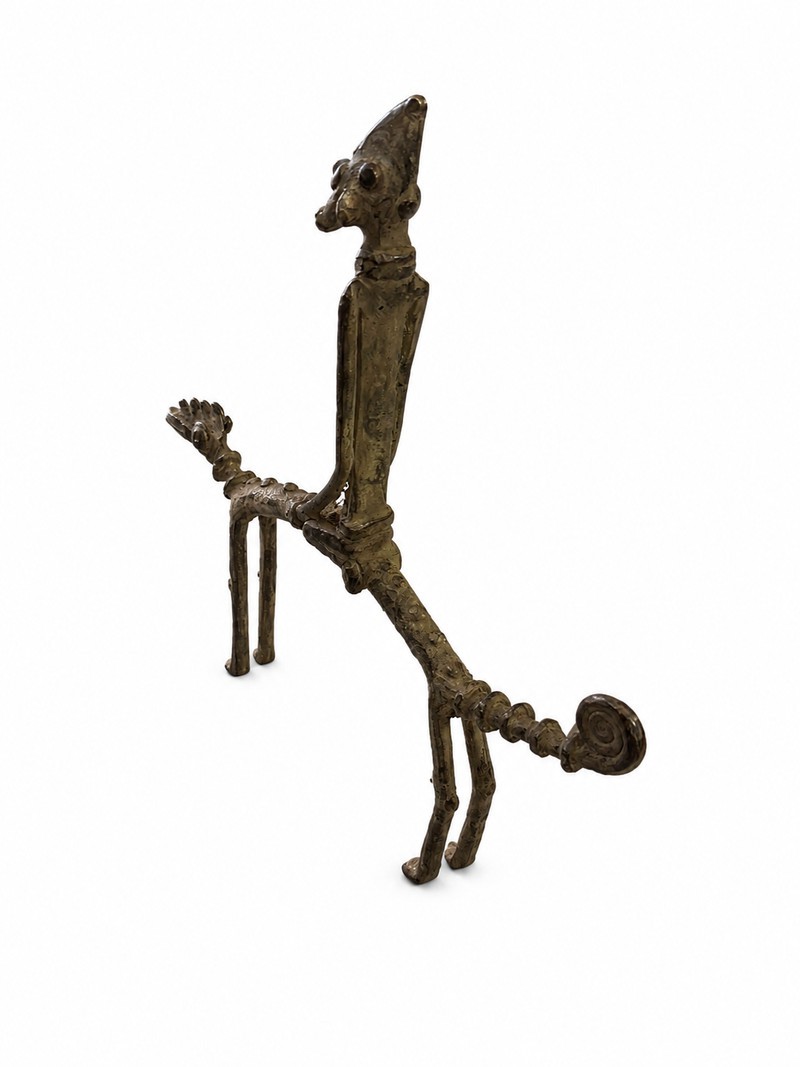
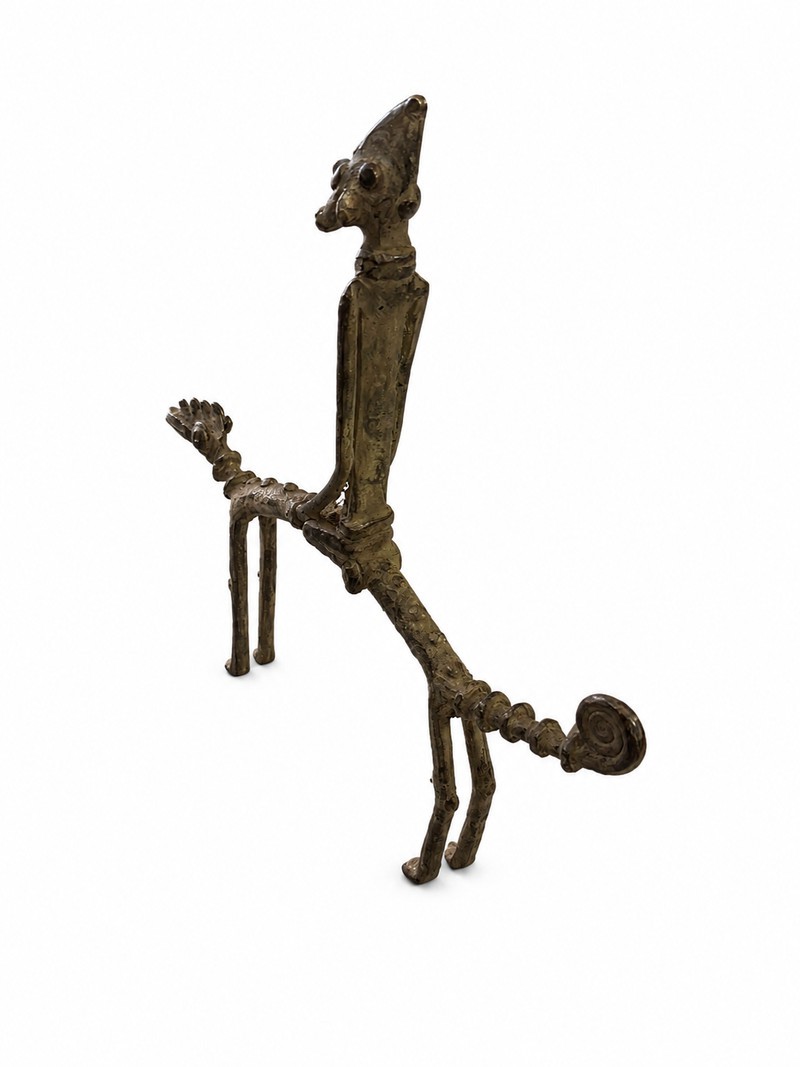
Dogon horseman in bronze
 United States
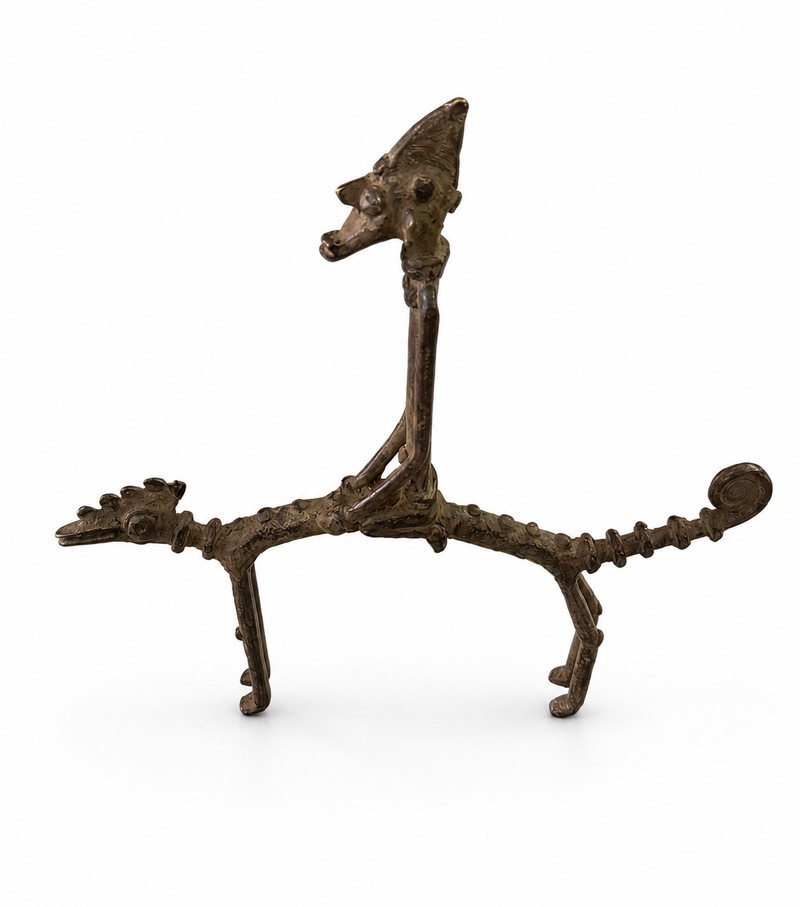
This statuette represents a bronze equestrian figure (a rider on a stylized mount), characteristic of traditional West African art (often originating from cultures such as the Dogon of Mali or the bronze-working peoples of the region). Material and technique: Made of copper alloy or bronze using the ancient lost-wax casting technique. Style: Very slender and geometric forms, with a rider wearing a pointed cap and a mount with slender, elongated legs. Meaning: In local cosmology (particularly among the Dogon), the rider symbolizes power, the founding ancestor, or the nommo (spirit of creation). Cultural symbolism: The Rider (Lébé): In Dogon culture, the horse is a rare and prestigious animal. The rider often represents the Hogon (the spiritual and religious leader) or a primordial mythical ancestor. Power: This figure symbolizes strength, authority, prestige, and the sacred link between the human world and the divine world. Dogon stylistic characteristics visible here: Verticality and elongation: The rider's torso and the mount's neck are very elongated. This is a classic hallmark of Dogon aesthetics. Ovated head: The stylized face with a pointed nose and a pointed headdress is typical of representations from this region of Mali. Scarification details: The small, round reliefs visible on the torso or neck often simulate ritual motifs or adornments. Patina: soft and textured
Translated automatically
View original
This statuette represents a bronze equestrian figure (a rider on a stylized mount), characteristic of traditional West African art (often originating from cultures such as the Dogon of Mali or the bronze-working peoples of the region). Material and technique: Made of copper alloy or bronze using the ancient lost-wax casting technique. Style: Very slender and geometric forms, with a rider wearing a pointed cap and a mount with slender, elongated legs. Meaning: In local cosmology (particularly among the Dogon), the rider symbolizes power, the founding ancestor, or the nommo (spirit of creation). Cultural symbolism: The Rider (Lébé): In Dogon culture, the horse is a rare and prestigious animal. The rider often represents the Hogon (the spiritual and religious leader) or a primordial mythical ancestor. Power: This figure symbolizes strength, authority, prestige, and the sacred link between the human world and the divine world. Dogon stylistic characteristics visible here: Verticality and elongation: The rider's torso and the mount's neck are very elongated. This is a classic hallmark of Dogon aesthetics. Ovated head: The stylized face with a pointed nose and a pointed headdress is typical of representations from this region of Mali. Scarification details: The small, round reliefs visible on the torso or neck often simulate ritual motifs or adornments. Patina: soft and textured
Cette statuette représente une figure équestre en bronze (cavalier sur sa monture au corps stylisé), caractéristique de l'art traditionnel d'Afrique de l'Ouest (provenant souvent de cultures comme les Dogon du Mali ou les peuples bronziers de la région).Matériau et technique : Réalisée en alliage de cuivre ou bronze selon la technique ancestrale de la cire perdue.
Style : Formes très élancées et géométriques, avec un cavalier coiffé d'un bonnet pointu et une monture aux pattes fines et allongées.Signification : Dans la cosmogonie locale (notamment chez les Dogon), le cavalier symbolise le pouvoir, l'ancêtre fondateur ou le nommo (esprit de la création).
Symbolisme culturel
Le Cavalier (Lébé) : Dans la culture Dogon, le cheval est un animal rare et prestigieux. Le cavalier représente souvent le Hogon (le chef spirituel et religieux) ou un ancêtre mythique primordial.
Le Pouvoir : Cette figure symbolise la force, l'autorité, le prestige et le lien sacré entre le monde des humains et le monde divin.
Caractéristiques stylistiques Dogon visibles iciVerticalité et étirement : Le torse du cavalier et le cou de la monture sont très allongés. C'est une marque classique de l'esthétique Dogon.
Tête en ogive : Le visage stylisé avec un nez en flèche et une coiffe pointue est typique des représentations de cette région du Mali.
Détails de scarifications : Les petits reliefs ronds visibles sur le torse ou le cou simulent souvent des motifs rituels ou des parures.
Patine : douce et structurée
More from tendancethnik 

Visit the shop


You May Also Like
Explore More


Similar searches
At Africa Creates, we do not believe in the myth of predefined sizes. Each body is different and deserves an outfit just as unique. Therefore, to use this guide, we recommend using your measurements in inches (as explained below) rather than the "4 to 22" sizes.
From there you can select the corresponding international size for your order, and each seller will then be able to make sure to send the PERFECT fit for YOU!
How to measure ?
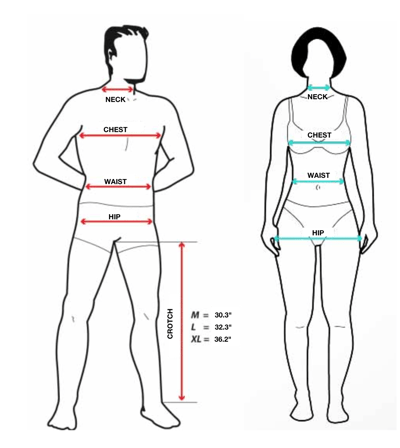
Collar size
Measure around the neck at the neck.
Chest size
Measure around your bust where it is wider by placing the tape measure under the arms and over the shoulder blades.
Waist size
Measure in the hollow of the waist.
Hip size
Keep your feet together and measure the widest part.
Crotch tower
Measure the top of the crotch up to the ankle bone.
Woman - Tops and dresses
| Int | Chest (in) | Waist (in) | Hip (in) | EU | UK | US |
|---|---|---|---|---|---|---|
| XXS | 30.7" - 32.3" | 22.8" - 24.4" | 33.1" - 34.6" | 32 | 4 | 0 |
| XS | 32.3" - 33.9" | 24.4" - 26" | 34.6" - 36.2" | 34 | 6 | 2 |
| S | 33.9" - 35.4" | 26" - 27.6" | 36.2" - 37.8" | 36 | 8 | 4 |
| M | 35.4" - 37" | 27.6" - 29.1" | 37.8" - 39.4" | 38 | 10 | 6 |
| L | 37" - 38.6" | 29.1" - 30.7" | 39.4" - 40.9" | 40 | 12 | 8 |
| XL | 38.6" - 40.2" | 30.7" - 32.3" | 40.9" - 42.5" | 42 | 14 | 10 |
| XXL | 40.2" - 41.7" | 32.3" - 33.9" | 42.5" - 44.1" | 44 | 16 | 12 |
| 3XL | 41.7" - 43.3" | 33.9" - 35.4" | 44.1" - 45.7" | 46 | 18 | 14 |
| 4XL | 43.3" - 45.7" | 35.4" - 38.6" | 45.7" - 48" | 48 | 20 | 16 |
| 5XL | 45.7" - 48" | 38.6" - 41.7" | 48" - 50.4" | 50 | 22 | 18 |
| 6XL | 48" - 50.4" | 41.7" - 44.9" | 50.4" - 52.8" | 52 | 24 | 20 |
| 7XL | 50.4" - 52.8" | 44.9" - 48" | 52.8" - 55.1" | 54 | 26 | 22 |
Woman - Pants, Skirts and Shorts
| Int | Waist (in) | EU | UK | US |
|---|---|---|---|---|
| XXS | 22.8" - 24.4" | 32 | 4 | 0 |
| XS | 24.4" - 26" | 34 | 6 | 2 |
| S | 26" - 27.6" | 36 | 8 | 4 |
| M | 27.6" - 29.1" | 38 | 10 | 6 |
| L | 29.1" - 30.7" | 40 | 12 | 8 |
| XL | 30.7" - 32.3" | 42 | 14 | 10 |
| XXL | 32.3" - 33.9" | 44 | 16 | 12 |
| 3XL | 33.9" - 35.4" | 46 | 18 | 14 |
| 4XL | 35.4" - 38.6" | 48 | 20 | 16 |
| 5XL | 38.6" - 41.7" | 50 | 22 | 18 |
| 6XL | 41.7" - 44.9" | 52 | 24 | 20 |
| 7XL | 44.9" - 48" | 54 | 26 | 22 |
Woman - Swimwear
| Int | Chest (in) | Waist (in) | Hip (in) | EU | UK | US |
|---|---|---|---|---|---|---|
| XXS | 30.7" | 23.6" | 33.1" | 32 | 4 | 0 |
| XS | 31.5" | 24.4" | 33.9" | 34 | 6 | 2 |
| S | 32.7" | 25.6" | 35" | 36 | 8 | 4 |
| M | 34.6" | 27.6" | 37" | 38 | 10 | 6 |
| L | 36.6" | 29.5" | 39" | 40 | 12 | 8 |
| XL | 38.6" | 31.5" | 40.9" | 42 | 14 | 10 |
| XXL | 40.5" | 33.5" | 42.9" | 44 | 16 | 12 |
| 3XL | 43.3" | 36.2" | 45.7" | 46 | 18 | 14 |
Woman - Bra
| Below the breasts (in) | Above the breasts (in) | EU | UK | US |
|---|---|---|---|---|
| 22.8" - 24.4" | 27.6" - 28.3" | 75 (AA) | ||
| 22.8" - 24.4" | 28.3" - 29.1" | 75 (A) | 28A | 28A |
| 22.8" - 24.4" | 29.1" - 29.9" | 75 (B) | 28B | 28B |
| 22.8" - 24.4" | 29.9" - 30.7" | 75 (C) | 28C | 28C |
| 22.8" - 24.4" | 30.7" - 31.5" | 75 (D) | 28D | 28D |
| 22.8" - 24.4" | 31.5" - 32.3" | 75 (E) | 28DD | 28DD |
| 22.8" - 24.4" | 32.3" - 33.1" | 75 (F) | 28E | 28DDD |
| 22.8" - 24.4" | 33" - 33.9" | 75 (G) | 28F | 28G |
| 22.8" - 24.4" | 33.9" - 34.6" | 75 (H) | 28FF | 28H |
| 24.4" - 26.4" | 30.3" - 31.1" | 80 (A) | 30A | 30A |
| 24.4" - 26.4" | 31.1" - 31.9" | 80 (B) | 30B | 30B |
| 24.4" - 26.4" | 31.9" - 32.7" | 80 (C) | 30C | 30C |
| 24.4" - 26.4" | 32.7" - 33.5" | 80 (D) | 30D | 30D |
| 24.4" - 26.4" | 33.5" - 34.2" | 80 (E) | 30DD | 30DD |
| 24.4" - 26.4" | 34.2" - 35" | 80 (F) | 30E | 30DDD |
| 24.4" - 26.4" | 35" - 35.8" | 80 (G) | 30F | 30G |
| 24.4" - 26.4" | 35.8" - 36.6" | 80 (H) | 30FF | 30H |
| 26.4" - 28.3" | 32.3" - 33.1" | 85 (A) | 32A | 32A |
| 26.4" - 28.3" | 33.1" - 33.9" | 85 (B) | 32B | 32B |
| 26.4" - 28.3" | 33.9" - 34.6" | 85 (C) | 32C | 32C |
| 26.4" - 28.3" | 34.6" - 35.4" | 85 (D) | 32D | 32D |
| 26.4" - 28.3" | 35.4" - 36.2" | 85 (E) | 32DD | 32DD |
| 26.4" - 28.3" | 36.2" - 37" | 85 (F) | 32E | 32DDD |
| 26.4" - 28.3" | 37" - 37.8" | 85 (G) | 32F | 32G |
| 26.4" - 28.3" | 37.8" - 38.6" | 85 (H) | 32FF | 32H |
| 28.3" - 30.3" | 34.2" - 35" | 90 (A) | 34A | 34A |
| 28.3" - 30.3" | 35" - 35.8" | 90 (B) | 34B | 34B |
| 28.3" - 30.3" | 35.8" - 36.6" | 90 (C) | 34C | 34C |
| 28.3" - 30.3" | 36.6" - 37.4" | 90 (D) | 34D | 34D |
| 28.3" - 30.3" | 37.4" - 38.2" | 90 (E) | 34DD | 34DD |
| 28.3" - 30.3" | 38.2" - 39" | 90 (F) | 34E | 34DDD |
| 28.3" - 30.3" | 39" - 39.8" | 90 (G) | 34F | 34G |
| 28.3" - 30.3" | 39.8" - 40.5" | 90 (H) | 34FF | 34H |
| 30.3" - 32.3" | 36.2" - 37" | 95 (A) | 36A | 36A |
| 30.3" - 32.3" | 37" - 37.8" | 95 (B) | 36B | 36B |
| 30.3" - 32.3" | 37.8" - 38.6" | 95 (C) | 36C | 36C |
| 30.3" - 32.3" | 38.6" - 39.4" | 95 (D) | 36D | 36D |
| 30.3" - 32.3" | 39.4" - 40.2" | 95 (E) | 36DD | 36DD |
| 30.3" - 32.3" | 40.2" - 40.9" | 95 (F) | 36E | 36DDD |
| 30.3" - 32.3" | 40.9" - 41.7" | 95 (G) | 36F | 36G |
| 30.3" - 32.3" | 41.7" - 42.5" | 95 (H) | 36FF | 36H |
| 100 (AA) | ||||
| 32.3" - 34.2" | 38.2" - 39" | 100 (A) | 38A | 38A |
| 32.3" - 34.2" | 39" - 39.8" | 100 (B) | 38B | 38B |
| 32.3" - 34.2" | 39.8" - 40.5" | 100 (C) | 38C | 38C |
| 32.3" - 34.2" | 40.5" - 41.3" | 100 (D) | 38D | 38D |
| 32.3" - 34.2" | 41.3" - 42.1" | 100 (E) | 38DD | 38DD |
| 32.3" - 34.2" | 42.1" - 42.9" | 100 (F) | 38E | 38DDD |
| 32.3" - 34.2" | 42.9" - 43.7" | 100 (G) | 38F | 38G |
| 32.3" - 34.2" | 43.7" - 44.5" | 100 (H) | 38FF | 38H |
| 34.2" - 36.2" | 40.2" - 40.9" | 105 (A) | 40A | 40A |
| 34.2" - 36.2" | 40.9" - 41.7" | 105 (B) | 40B | 40B |
| 34.2" - 36.2" | 41.7" - 42.5" | 105 (C) | 40C | 40C |
| 34.2" - 36.2" | 42.5" - 43.3" | 105 (D) | 40D | 40D |
| 34.2" - 36.2" | 43.3" - 44.1" | 105 (E) | 40DD | 40DD |
| 34.2" - 36.2" | 44.1" - 44.9" | 105 (F) | 40E | 40DDD |
| 34.2" - 36.2" | 44.9" - 45.7" | 105 (G) | 40F | 40G |
| 34.2" - 36.2" | 45.7" - 46.5" | 105 (H) | 40FF | 40H |
| 36.2" - 38.2" | 42.1" - 42.9" | 110 (A) | 42A | 42A |
| 36.2" - 38.2" | 42.9" - 43.7" | 110 (B) | 42B | 42B |
| 36.2" - 38.2" | 43.7" - 44.5" | 110 (C) | 42C | 42C |
| 36.2" - 38.2" | 44.5" - 45.3" | 110 (D) | 42D | 42D |
| 36.2" - 38.2" | 45.3" - 46.1" | 110 (E) | 42DD | 42DD |
| 36.2" - 38.2" | 46.1" - 46.8" | 110 (F) | 42E | 42DDD |
| 36.2" - 38.2" | 46.8" - 47.6" | 110 (G) | 42F | 42G |
| 36.2" - 38.2" | 47.6" - 48.4" | 110 (H) | 42FF | 42H |
| 38.2" - 40.2" | 44.1" - 44.9" | 115 (A) | 44A | 44A |
| 38.2" - 40.2" | 44.9" - 45.7" | 115 (B) | 44B | 44B |
| 38.2" - 40.2" | 45.7" - 46.5" | 115 (C) | 44C | 44C |
| 38.2" - 40.2" | 46.5" - 47.2" | 115 (D) | 44D | 44D |
| 38.2" - 40.2" | 47.2" - 48" | 115 (E) | 44DD | 44DD |
| 38.2" - 40.2" | 48" - 48.8" | 115 (F) | 44E | 44DDD |
| 38.2" - 40.2" | 48.8" - 49.6" | 115 (G) | 44F | 44G |
| 38.2" - 40.2" | 49.6" - 50.4" | 115 (H) | 44FF | 44H |
Man - Shirts
| Int | Chest (in) | Neckband (in) |
|---|---|---|
| XXS | 32"-34" | 14" |
| XS | 34"-36" | 14.5" |
| S | 36"-38" | 15" |
| M | 38"-40" | 16" |
| L | 40"-42" | 17" |
| XL | 42"-44" | 17.5" |
| XXL | 44"-46" | 18" |
| 3XL | 46"-48" | 18.5" |
Man - T-shirts, polos, sweatshirts and jumpers
| Int | Chest (in) |
|---|---|
| XXS | 32"-34" |
| XS | 34"-36" |
| S | 36"-38" |
| M | 38"-40" |
| L | 40"-42" |
| XL | 42"-44" |
| XXL | 44"-46" |
| 3XL | 46"-48" |
Man - Jackets, parkas and coats
| Int | Chest (in) |
|---|---|
| XXS | 32"-34" |
| XS | 34"-36" |
| S | 36"-38" |
| M | 38"-40" |
| L | 40"-42" |
| XL | 42"-44" |
| XXL | 44"-46" |
| 3XL | 46"-48" |
Man - Pants and shorts
| Int | Waist (in) | Height (in) | Crotch (in) |
|---|---|---|---|
| XXS | 26"-28" | Short | 30" |
| XS | 28"-30" | Standard | 32" |
| S | 30"-32" | Long | 34" |
| M | 32"-34" | ||
| L | 34"-36" | ||
| XL | 36"-38" | ||
| XXL | 38"-40" | ||
| 3XL | 40"-42" | ||
| 4XL | 42"-44" | ||
| 5XL | 44"-46" | ||
| 6XL | 46"-48" |
Kid - Baby
| Age | Weight (kg) | Height (in) |
|---|---|---|
| Birth | 3,3 | 19.7" |
| 1 month | 4 | 21.3" |
| 3 months | 5 - 6 | 23.6" |
| 6 months | 7 - 8 | 26.4" |
| 9 months | 8 - 9 | 27.9" |
| 12 months | 9 - 10 | 29.1" |
| 18 months | 11 | 31.9" |
| 24 months | 12 | 33.9" |
| 36 months | 14 | 37" |
Kid - Girl
| Age | Height (in) | Chest (in) | Waist (in) | Hip (in) |
|---|---|---|---|---|
| 2 years | 32.7" - 34.6" | 20.5" | 18.9" | 22" |
| 3 years | 34.7" - 37.8" | 21.3" | 19.7" | 22.8" |
| 4 years | 37.8" - 40.9" | 22" | 20.5" | 23.6" |
| 5 years | 40.9" - 43.3" | 22.8" | 20.9" | 24.4" |
| 6 years | 43.3" - 45.7" | 23.6" | 21.3" | 26" |
| 7 years | 45.7" - 48" | 24.4" | 21.6" | 26.8" |
| 8 years | 48" - 50.4" | 25.2" | 22" | 27.6" |
| 9 years | 50.4" - 52.8" | 26.4" | 22.4" | 28.7" |
| 10 years | 52.8" - 55.1" | 27.6" | 23.2" | 29.9" |
| 12 years | 55.1" - 59.8" | 30.7" | 24.4" | 33.1" |
| 14 years | 59.8" - 62.2" | 32.3" | 25.2" | 34.6" |
| 16 years | 62.2" - 64.6" | 33.9" | 26" | 36.2" |
Kid - Boy
| Age | Height (in) | Chest (in) | Waist (in) | Hip (in) |
|---|---|---|---|---|
| 2 years | 32.7" - 34.6" | 20.5" | 18.9" | 22" |
| 3 years | 34.6" - 37.8" | 21.3" | 19.7" | 22.8" |
| 4 years | 37.8" - 40.9" | 22" | 20.5" | 23.6" |
| 5 years | 40.9" - 43.3" | 22.8" | 20.9" | 24.4" |
| 6 years | 43.3" - 45.7" | 23.6" | 21.3" | 24.4" |
| 7 years | 45.7" - 48" | 24.4" | 21.6" | 25.2" |
| 8 years | 48" - 50.4" | 25.2" | 22" | 26" |
| 9 years | 50.4" - 52.8" | 26.4" | 22.4" | 27.2" |
| 10 years | 52.8" - 55.1" | 26.8" | 23.2" | 28.3" |
| 12 years | 55.1" - 59.8" | 29.5" | 26" | 30.7" |
| 14 years | 59.8" - 64.6" | 32.3" | 27.6" | 33.9" |
| 16 years | 64.6" - 69.3" | 35" | 29.1" | 36.2" |
Kids - Shoes
| EU | UK | US | in |
|---|---|---|---|
| 16 | 0.5 | 1 | 3.5" |
| 17 | 1 | 1.5 | 3.6" |
| 18 | 2 | 3 | 4" |
| 19 | 3 | 4 | 4.3" |
| 20 | 4 | 5 | 4.6" |
| 21 | 4.5 | 5.5 | 5" |
| 22 | 5 | 6 | 5.2" |
| 23 | 6 | 7 | 5.5" |
| 24 | 7 | 8 | 5.8" |
| 25 | 8 | 9 | 6.1" |
| 26 | 8.5 | 9.5 | 6.3" |
| 27 | 9 | 10 | 6.5" |
| 28 | 10 | 11 | 6.8" |
| 29 | 10.5 | 11.5 | 7" |
| 30 | 11 | 12 | 7.2" |
| 31 | 12 | 13 | 7.5" |
| 32 | 13 | Big Kid 1 | 7.7" |
| 33 | 13.5 | Big Kid 1,5 | 8" |
Woman - Shoes
| EU | UK | US | in |
|---|---|---|---|
| 34 | 2 | 4 | 8.2" |
| 35 | 2.5 | 4.5 | 8.3" |
| 35.5 | 3 | 5 | 8.5" |
| 36 | 3.5 | 5.5 | 8.8" |
| 36.5 | 4 | 6 | 8.9" |
| 37 | 4.5 | 6.5 | 9.1" |
| 37.5 | 5 | 7 | 9.3" |
| 38 | 5.5 | 7.5 | 9.4" |
| 38.5 | 6 | 8 | 9.5" |
| 39 | 6.5 | 8.5 | 9.7" |
| 39.5 | 7 | 9 | 9.9" |
| 40 | 7.5 | 9.5 | 10" |
| 40.5 | 8 | 10 | 10.2" |
| 41 | 8.5 | 10.5 | 10.3" |
| 41.5 | 9 | 11 | 10.5" |
| 42 | 9.5 | 11.5 | 10.7" |
| 42.5 | 10 | 12 | 10.9" |
Man - Shoes
| EU | UK | US | in |
|---|---|---|---|
| 38.5 | 5 | 5.5 | 9" |
| 39 | 5.5 | 6 | 9.3" |
| 39.5 | 6 | 6.5 | 9.5" |
| 40 | 6.5 | 7 | 9.6" |
| 40.5 | 7 | 7.5 | 9.8" |
| 41 | 7.5 | 8 | 9.9" |
| 41.5 | 8 | 8.5 | 10.1" |
| 42 | 8.5 | 9 | 10.3" |
| 42.5 | 9 | 9.5 | 10.4" |
| 43 | 9.5 | 10 | 10.6" |
| 43.5 | 10 | 10.5 | 10.8" |
| 44 | 10.5 | 11 | 10.9" |
| 44.5 | 11 | 11.5 | 11.1" |
| 45 | 11.5 | 12 | 11.3" |
| 46 | 12.5 | 13 | 11.6" |
| 47 | 13.5 | 14 | 11.9" |
| 48 | 14.5 | 15 | 12.2" |